Blog
Hello world (v2)
New blog. From MSX machines and dial-up modems to fintech and AI: the path from wanting to be a hacker to building products and teams.
This is one of the first posts on the blog. I will use this space to write about my thoughts on technology, entrepreneurship, and whatever else I am trying to understand or make sense of at the time.
I do not expect it to become a widely read blog. I simply like the idea of having it, and I find it fun to make a corner of the internet my own. The plan is to have an agent help manage it. The agent has explicit instructions to write blog posts the way I would write them, trying to reduce the AI slope, although that can sometimes be difficult to achieve. I want to write posts by speaking them aloud and using speech-to-text. We are living in a new era, aren’t we?
I have just given my website a complete overhaul. Naturally, I used Codex to help me build it. Getting everything into shape took about 3 hours, which still feels remarkable. The website is built with Astro, uses MDX for the blog posts, and is hosted on Cloudflare’s free tier. Not long ago, this would have taken me much more time.
This redesign also comes with a domain migration. For a long time, my website lived at sergiortega.com, but I have now moved it to sergi.io. I looked at other options too, including variants of sergi.io and similar domains, but many of them were already taken. In the end, sergi.io felt short, easy to remember, and sufficiently mine.
I suppose this website is also a good excuse to explain where my relationship with computers began. When I was 8, almost all of my cousins were starting to get computers, especially MSX machines. So my parents bought me one for my birthday. To me, it was pure magic: I understood practically nothing, and little by little I learned how to use it.
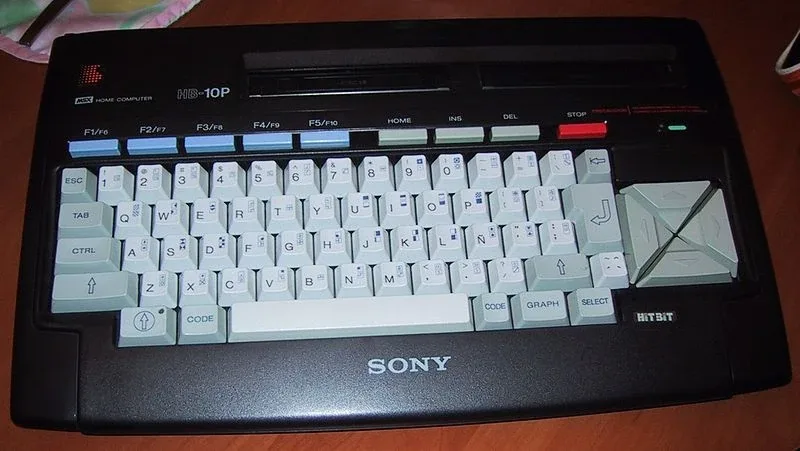
My Sony MSX HB-10P, the computer that introduced me to computing.
Back then, games were not installed; they were loaded from cassette tapes, and it could take around fifteen minutes before a game was ready. Most of the time, I loaded games and played them, but when I was 12, I started reading the MSX - BASIC manual and trying to draw some graphics. It was the very first programming book I read. It was brilliant: a computer that connected to the television and somehow obeyed what you asked it to do.
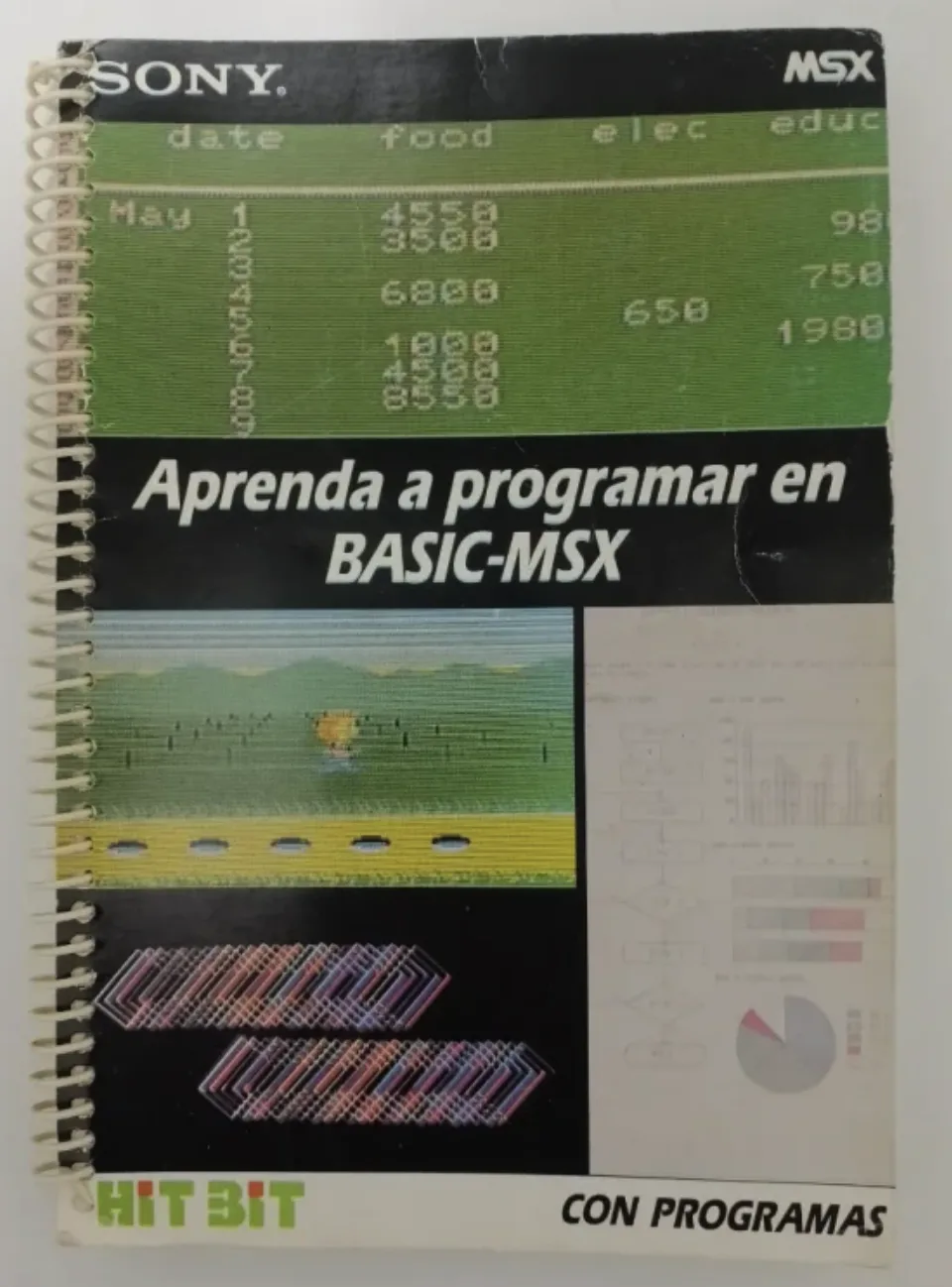
The MSX BASIC manual, the first programming book I read at 12 yo.
Around that time, I would sit completely absorbed, watching my cousin, who was studying Computer Engineering, program in C for his university assignments on a 486 computer running at 66 megahertz. On that same computer, we played epic adventures together, including Monkey Island and Day of the Tentacle. It was a golden era for me. I was fascinated by the way he wrote lines of code and built things with them. That MSX was my first window into the idea that computers were not only for consuming things, but also for creating them.
When I was 15, my parents bought me my first desktop computer: a Pentium 233 MMX. It had an 8-gigabyte hard drive, 32 megabytes of RAM, and a Matrox Mystique graphics card. A couple of years later, I added a 3Dfx Voodoo card to it.
All of that marked an era that would shape much of my life during high school. We had groups where we shared games and talked all day about computers, programming, and viruses. We were also fascinated by assembly language. We were still naive enough to believe that assembly could make a floppy drive’s motor spin backwards and destroy a classmate’s floppy drive. In reality, it was just an urban legend circulating on the internet.
Around that time, the first modems were starting to appear. I remember that my first modem was a 33-kilobaud modem, and that flat-rate internet did not exist yet. For every hour we spent online, we put some money in a piggy bank and gave it to our parents at the end of the month. Friends came to my house to connect and explore. We would stay connected until the early hours of the morning, searching for information and figuring out how to make things. THE WORLD WAS CONNECTED! People were sharing information at an incredible pace, and if you were one of the lucky ones with internet access, you were part of the greatest revolution ever created. We were little script kiddies in every sense of the term.
Later came the ADSL era, and everything changed. Cybercafés were everywhere, and we met up in them. The conversations were amazing: video games, computers, and programming. By then I had finished high school and signed up for a programming course while considering going to university.
In that first programming course, I built software for cybercafés that used Win32 sockets to control the machines remotely. The project won a CIRIT award from the Generalitat de Catalunya. It was one of the first times I realised that something I built with code could have a life beyond my bedroom and circle of friends.
Later, I enrolled in distance university while working. By then, I had had all kinds of jobs, although they were always related to computing. I was so passionate about it that I found job interviews easy to get through. At the end of my degree, my final thesis project for managing business errors was selected as the winner from 300 projects and won my university’s project conference. It felt especially meaningful to close that chapter by building a useful tool and seeing the work recognised.
There were also several films that shaped who I am. One was Pirates of Silicon Valley, the story of Microsoft and Apple. Another was, of course, the great film Hackers. And one I also loved was Takedown, the story of Kevin Mitnick, may he rest in peace. The film showed how he managed to bypass certain security systems and carry out hijacking on some mobile phones to listen in on conversations. And, of course, WarGames: the story of a young man who accesses a military supercomputer and discovers that sometimes the only way to win is not to play.
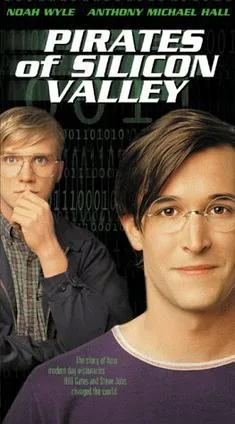
Pirates of Silicon Valley (1999)
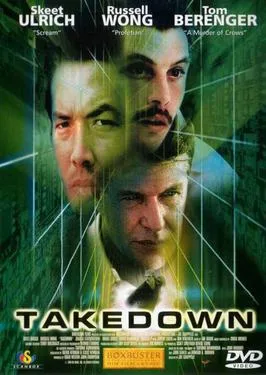
Takedown (2000)
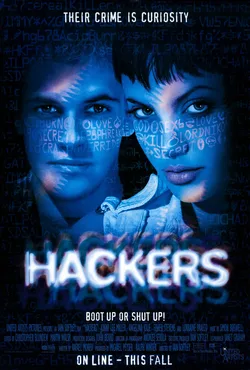
Hackers (1995)
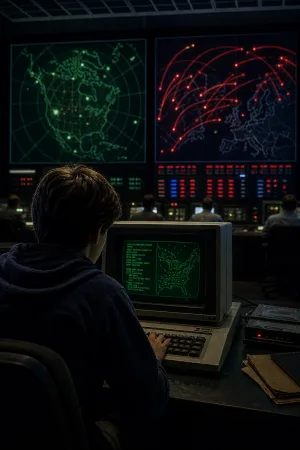
WarGames (1983)
At first, I thought I would work in security. Cybersecurity and the idea of being a hacker fascinated me. And I have to say that I wanted to be a hacker, but what I really wanted was to be an indie hacker. The term had not been coined yet at the time, but that was exactly what appealed to me. Little by little, I realised that what I really loved was creating things. I was passionate about the fact that software, video games, and art could be created from nothing. The idea that a human being, with a machine, could make something like that completely blew my mind, and I had to be part of it.
Growing up in a humble, hardworking family taught me the value of work, but it has also meant relying on others to keep moving forward and support my own family. I hope that will change someday.
That drive to build has shaped a career across many roles and environments. I co-founded a consultancy that ran for years, building e-commerce products and supporting end customers. I have worked as a backend and frontend engineer, hostmaster, systems administrator, Founding Engineer, and Engineering Manager, administering Linux infrastructure, setting up small data centres, taking part in large customer migrations between them, and even building software for Panasonic PBX systems using the TAPI v2 protocol. I even worked as a designer and UX researcher at one point in my life. Lately, I have been building fintech products, helping companies grow from seed stage through Series A and B. I have always enjoyed helping products move forward, but what I value most is staying close to the engineers, working in the trenches, and making a tangible impact.
Today, I am riding the wave of artificial intelligence and exploring how we can improve the products at the company I currently work for. After the internet, AI feels like the next revolution. It is making a lot of noise right now, but I find it endlessly exciting. What a time to be alive! I absolutely love it.
Thanks for reading. Hack the planet!